
Places to travel India in May
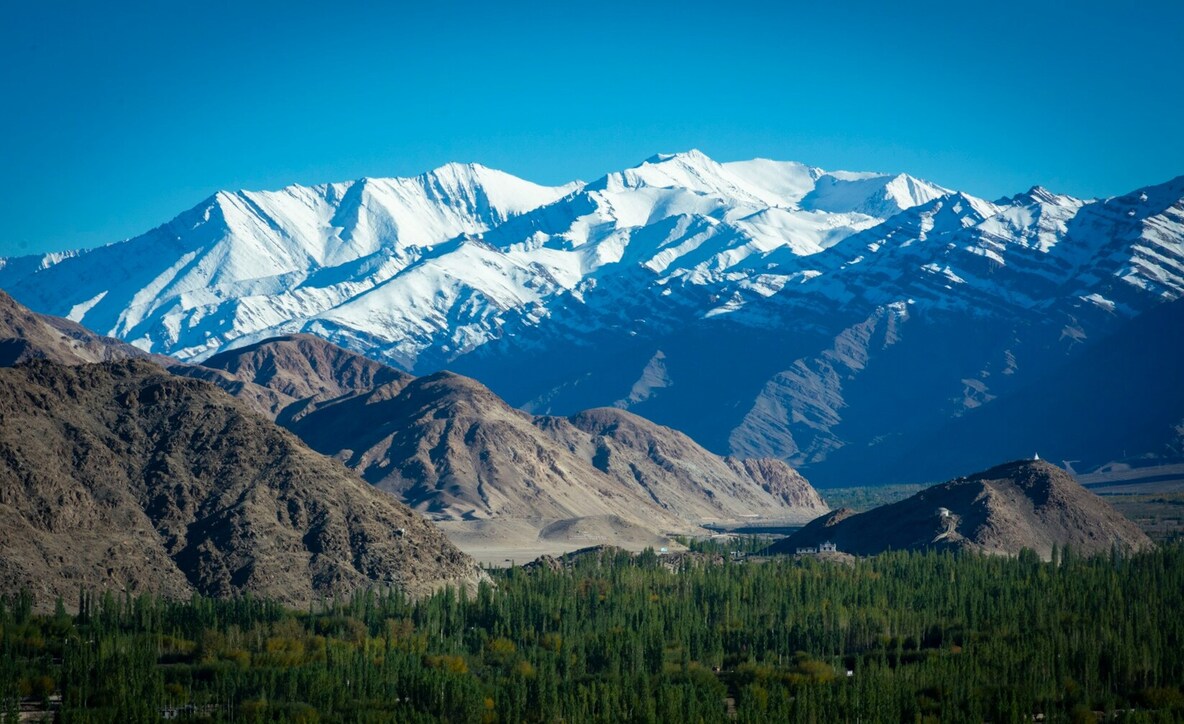
May is typically very unpleasant in most regions of India. In the plains of Rajasthan, Delhi, Madhya Pradesh, and the Deccan, temperatures often soar between 42 and 46 degrees. However, this month also marks the opening of roads in Ladakh, the Himalayan hill stations are lush before the rains arrive, and certain areas in the northeast experience a short period of favorable weather between the end of winter and the beginning of the heavy rains. Understanding which areas are worth exploring and which should be skipped is essential.
In this Blog
1. Manali, Himachal Pradesh (18 to 25°C)
2. Leh, Ladakh (10 to 22°C)
3. Darjeeling, West Bengal (14 to 20°C)
4. Coorg, Karnataka (18 to 26°C)
5. Andaman Islands (26 to 32°C)
6. Gangtok, Sikkim (15 to 22°C)
7. Spiti Valley, Himachal Pradesh (5 to 18°C)
8. Ooty, Tamil Nadu (14 to 22°C)
9. Munnar, Kerala (14 to 22°C)
10. Shillong, Meghalaya (16 to 22°C)
1. Manali, Himachal Pradesh (18 to 25°C)
May is considered the top month for Manali by many standards. The Rohtang Pass is typically accessible between May 15 and 20, while the upper inclines of Solang Valley retain their snow, and the Beas River flows vigorously due to melting snow. The town of Manali itself exhibits lush greenery and pleasant temperatures, averaging 18 to 22°C during the day and cooling down to 10 to 12°C at night. The Old Manali region and nearby villages such as Vashisht are at their most attractive in May, prior to the influx of summer tourists. Moreover, the Hampta Pass trek emerges as a popular choice from Manali in this month. To secure stays at Stay Vista’s properties in Manali, it’s advisable to make reservations early since May is a high-demand period, and the more sought-after accommodations tend to fill up 4 to 6 weeks ahead of time.
2. Leh, Ladakh (10 to 22°C)
The highway connecting Manali and Leh usually opens between May 15 and May 25, depending on the amount of snow that needs to be cleared that year. Flights to Leh are available throughout the year from Delhi and other key cities. By the end of May, the roads to both Pangong Tso and Nubra Valley are generally accessible, allowing travelers to enjoy the entire Ladakh region by late May. It is advisable to spend two full days in Leh for acclimatization before traveling to higher elevations. The height of Leh, at 3,524 meters, poses a real risk, and altitude sickness is a frequent issue without proper rest. May provides excellent lighting conditions for photography, less congestion compared to the busy months of July to September, and pleasant temperatures that are mild rather than harsh.
3. Darjeeling, West Bengal (14 to 20°C)
The period from the 1st to the 15th of May is ideal for visiting Darjeeling. The weather is mostly clear until the pre-monsoon clouds start to accumulate in the middle of May. The vistas of Kanchenjunga from Tiger Hill are consistent during the initial two weeks. The tea plantations are experiencing their second flush, which is highly sought after by tea lovers for its unique muscatel flavor. Pairing a visit to Gangtok and Pelling will enhance the overall experience. After the 15th, the cloud coverage increases, making visibility more uncertain.
4. Coorg, Karnataka (18 to 26°C)
The month of May in Coorg marks the final enjoyable period prior to the monsoon's vigorous start in early June. The coffee plantations exhibit a rich greenery, the Abbey Falls along with smaller cascades are beginning to swell with pre-monsoon showers, and the number of visitors is reduced compared to the busy December to February period. Although the coffee harvest has concluded, there are opportunities to stay at estates with accompanied walks. The weather remains nice, and the humidity is significantly lower than in coastal areas. A minimum of three nights at StayVista’s Coorg accommodations is recommended to truly immerse yourself in the scenery.
5. Andaman Islands (26 to 32°C)
May serves as a transitional period in the Andaman Islands, yet the waters remain sufficiently tranquil for snorkeling and diving for the majority of the month. The eastern coastline of the islands, facing the Bay of Bengal, is generally more serene than the western side, allowing for continued access to Havelock (Swaraj Dweep) and Neil Island (Shaheed Dweep). Costs significantly decrease from the high season that runs from December through January. Radhanagar Beach on Havelock, often recognized as one of Asia’s top beaches, experiences a true lack of crowding during May.
6. Gangtok, Sikkim (15 to 22°C)
In May, the rhododendrons start to bloom in the elevated regions of Sikkim, while the skies before the monsoon remain mostly clear during the first half of the month. North Sikkim, which includes Gurudongmar Lake at an altitude of 5,430 meters, as well as Lachen and Lachung, is available for exploration with the necessary Protected Area Permit obtained through a licensed local operator. Early May still sees snow along the shores of Tsomgo Lake. For a well-rounded trip lasting 7 to 8 days, consider combining visits to Gangtok, Darjeeling, and Pelling.
7. Spiti Valley, Himachal Pradesh (5 to 18°C)
The road to Kaza from Shimla usually opens around the middle of May. In this month, Spiti retains some snow on the nearby mountains, and all the key monasteries, such as Kaza, Tabo, Dhankar, and Ki, can be visited with limited tourist presence. The Kunzum Pass, which links Spiti to Lahaul, might still be closed due to snow during the early days of the month, so it's advisable to check for updates from the BRO. You can access Pin Valley and Langza village, known for its marine fossils at an altitude of 4,400 meters, from Kaza. Visiting Spiti in May gives the impression that the entire valley is yours to enjoy.
8. Ooty, Tamil Nadu (14 to 22°C)
Ooty during May is consistently more pleasant than all locations in the Tamil Nadu lowlands and is located in the Nilgiri Hills at an elevation of 2,240 meters. The Nilgiri Mountain Railway, recognized as a UNESCO heritage site, is a must-do experience; the train journey utilizes a rack-and-pinion system and offers breathtaking views as it ascends through lush forests and tea plantations. The botanical gardens are vibrant with flowers. It is advisable to steer clear of weekends starting in May, as the area becomes extremely busy with local tourists on their summer breaks. Visiting on weekdays is much more enjoyable.
9. Munnar, Kerala (14 to 22°C)
The southwest monsoon in Kerala generally makes its appearance in late May or early June, typically touching the Kerala shoreline between the 1st and 7th of June. The initial week of May in Munnar offers pleasant, sunny days, lush tea plantations, and significantly fewer visitors compared to the peak season from October to February. As the third week of May approaches, clouds associated with the pre-monsoon start to accumulate, leading to more uncertain weather conditions. If planning a trip to Munnar in May, it is advisable to schedule your visit for the first half of the month.
10. Shillong, Meghalaya (16 to 22°C)
In May, Shillong is lush, mostly free of tourists, and you can easily visit both the living root bridges located in Nongriat (close to Cherrapunji) and the tidy village of Mawlynnong. Although Meghalaya receives substantial rainfall each year, May occurs prior to the peak of the monsoon season. The Dawki River, which runs along the Bangladesh border, offers a beautiful day trip from Shillong, with its transparent waters allowing you to glimpse the riverbed while on a boat.

Places to Avoid in India in May
In May, the conditions in much of peninsular and central India can be extremely harsh. These places should definitely be avoided until the climate improves. Rajasthan (Jaisalmer, Jodhpur, Bikaner, Barmer) — By mid-May, temperatures in the Thar Desert often reach 48 to 50°C. The heat is not just uncomfortable; it can be life-threatening. Jaisalmer and Jodhpur truly shine from October to February. May is definitely not the time to visit.
Delhi, Agra, and the Golden Triangle — Throughout most of May, Delhi experiences temperatures around 44 to 46°C, along with poor air quality and sudden dust storms (andhi). The Taj Mahal appears less appealing in a haze of heat. This route is best saved for October to March.
Varanasi and the Gangetic Plains — In May, Varanasi experiences temperatures between 42 to 45°C accompanied by high humidity from the river. The ghats, which are enchanting in winter, are mostly empty as wise travelers choose to stay away in May. The heat makes even a brief stroll along the riverfront quite uncomfortable.
Mumbai and the Konkan Coast — While not hazardous, the weather is very unpleasant. The pre-monsoon humidity in Mumbai throughout May typically exceeds 85 to 90%. Alibaug, Kashid, and the coastal areas feel sticky and are often overcast. It’s better to wait for the monsoon (which hits Mumbai around June 10) or revisit in October.
Madhya Pradesh (Khajuraho, Bandhavgarh, Kanha) — The tiger reserves face intense heat in May. Khajuraho frequently reaches above 44°C. Bandhavgarh and Kanha national parks are closed from July, but they are particularly harsh in May — while tiger sightings may happen, spending three hours in an open jeep at 43°C is not something most people expect.
Goa — In May, Goa experiences pre-monsoon weather: overcast skies, rough seas, many beach shacks are shut, and humidity intensifies the heat beyond what the thermometer indicates. The state is in the process of winding down for the season. It fully reopens in October.